


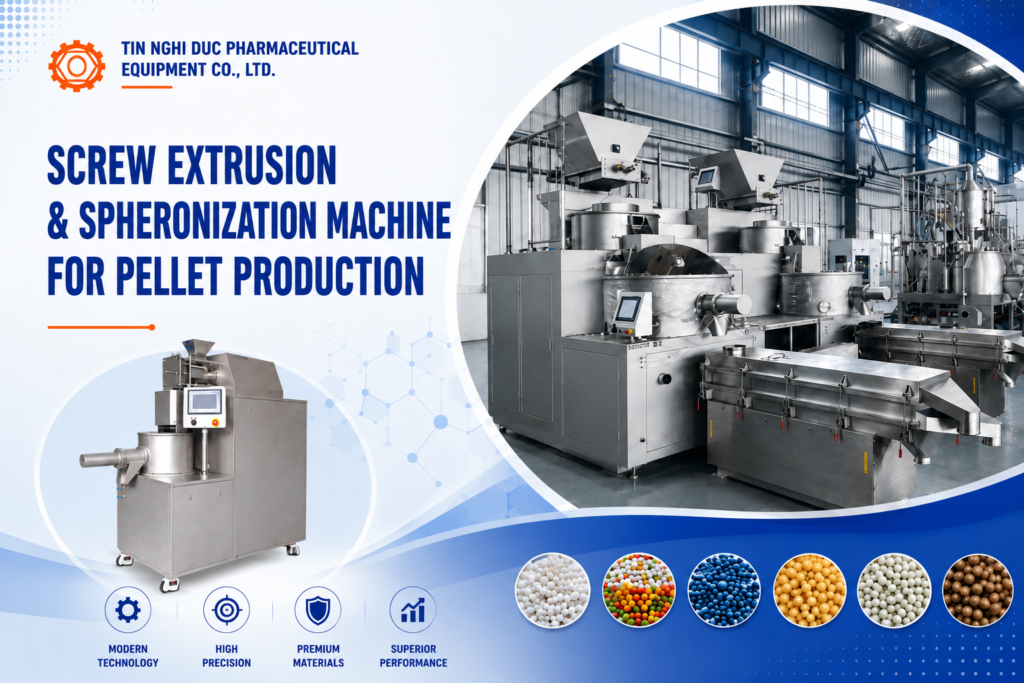
PELLETIZER – A MODERN SOLUTION FOR CONTROLLED-RELEASE AND ENTERIC-COATED DRUG DELIVERY SYSTEMS
The Screw Extrusion–Spheronization Machine for Pellet Production is an essential piece of equipment in modern pharmaceutical manufacturing. Extrusion–spheronization technology enables the production of pellets with uniform particle size, high sphericity, and excellent film-coating performance, making them ideal for sustained-release formulations, enteric-coated products, and Multiple Unit Pellet Systems (MUPS).
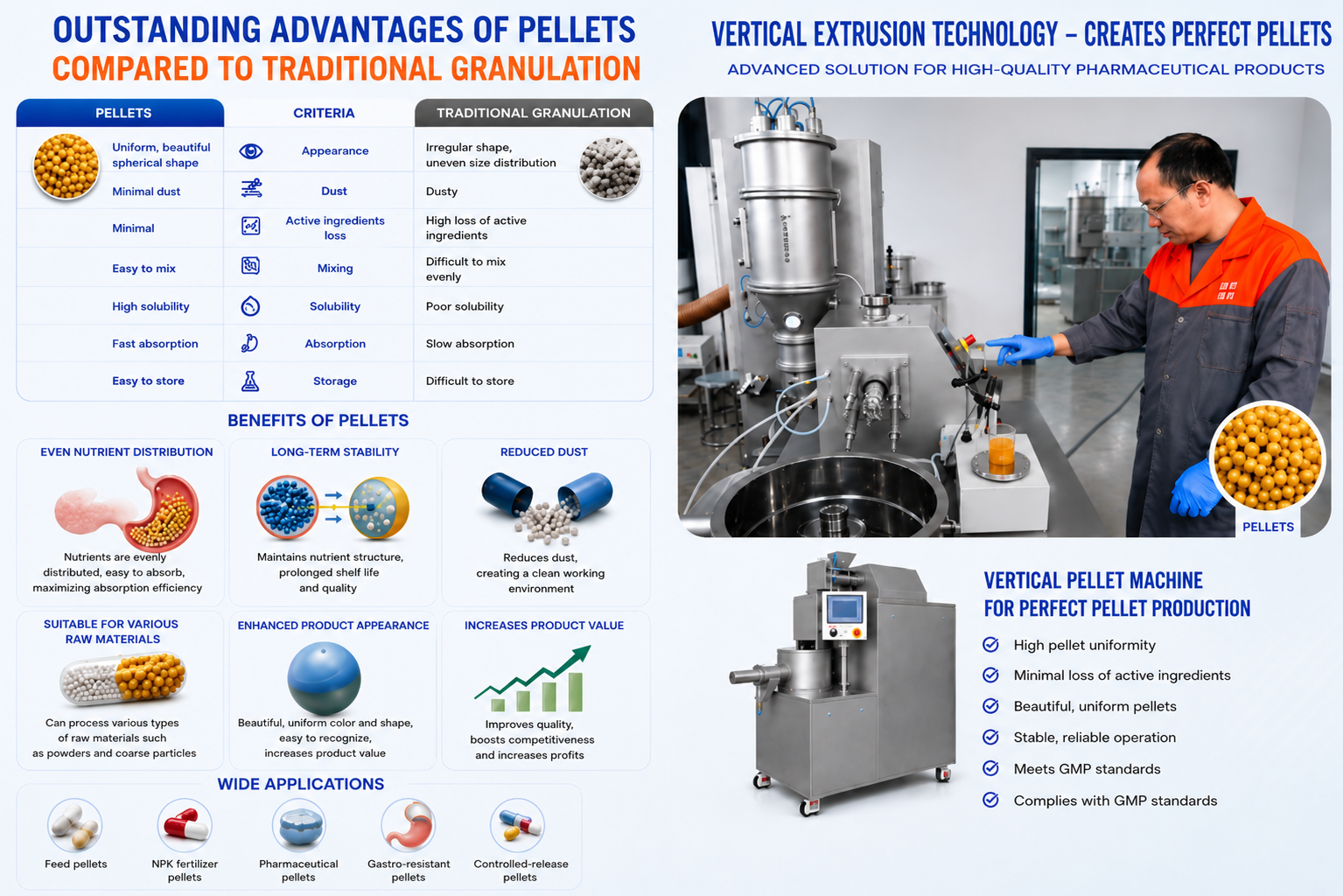
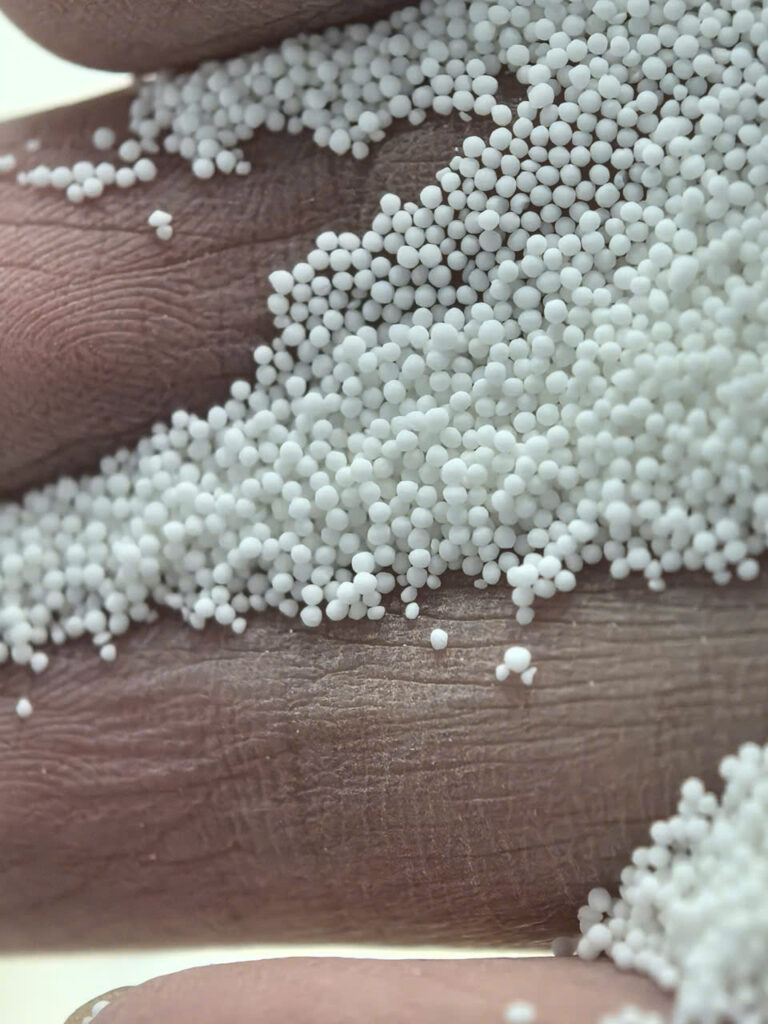
Compared with conventional granules, pellets offer several significant advantages. Their spherical shape improves flowability, minimizes segregation during manufacturing, and ensures better content uniformity of the active pharmaceutical ingredient (API). The smooth surface of pellets also facilitates the application of functional coatings such as enteric coatings, sustained-release coatings, and taste-masking coatings.
In addition, pellet technology allows for a more uniform distribution of the drug throughout the gastrointestinal tract, reducing localized irritation and enhancing drug absorption. As a result, many high-value pharmaceutical products have increasingly adopted pellet-based formulations in place of traditional dosage forms.
Improved Drug Distribution in the Gastrointestinal Tract
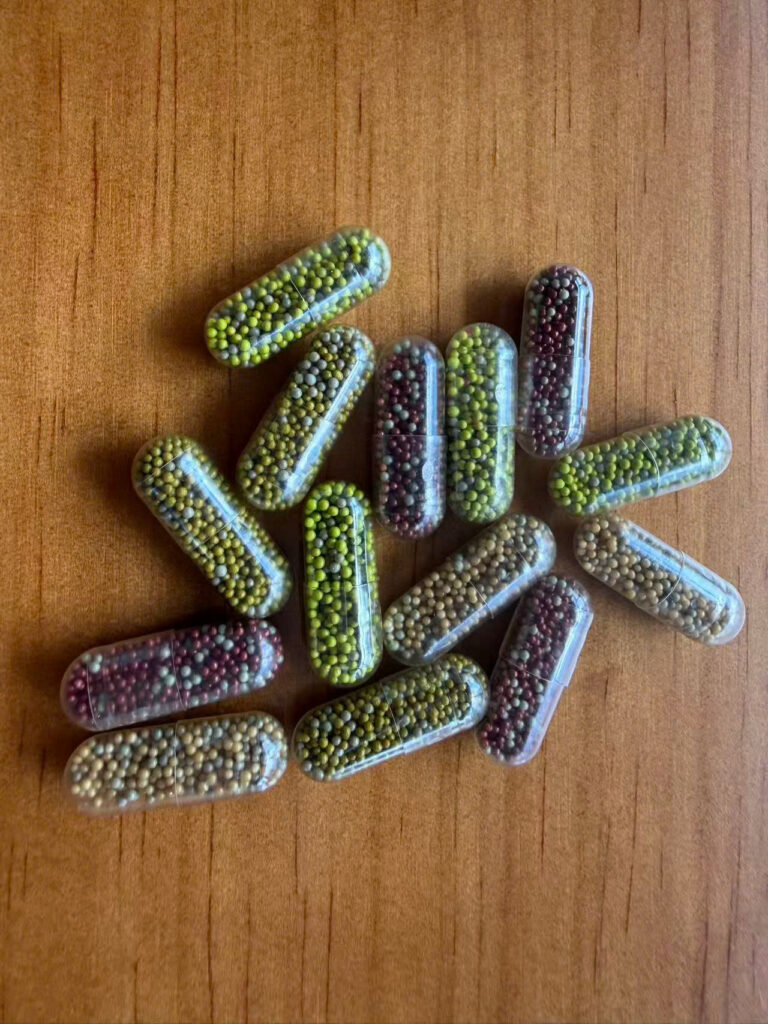
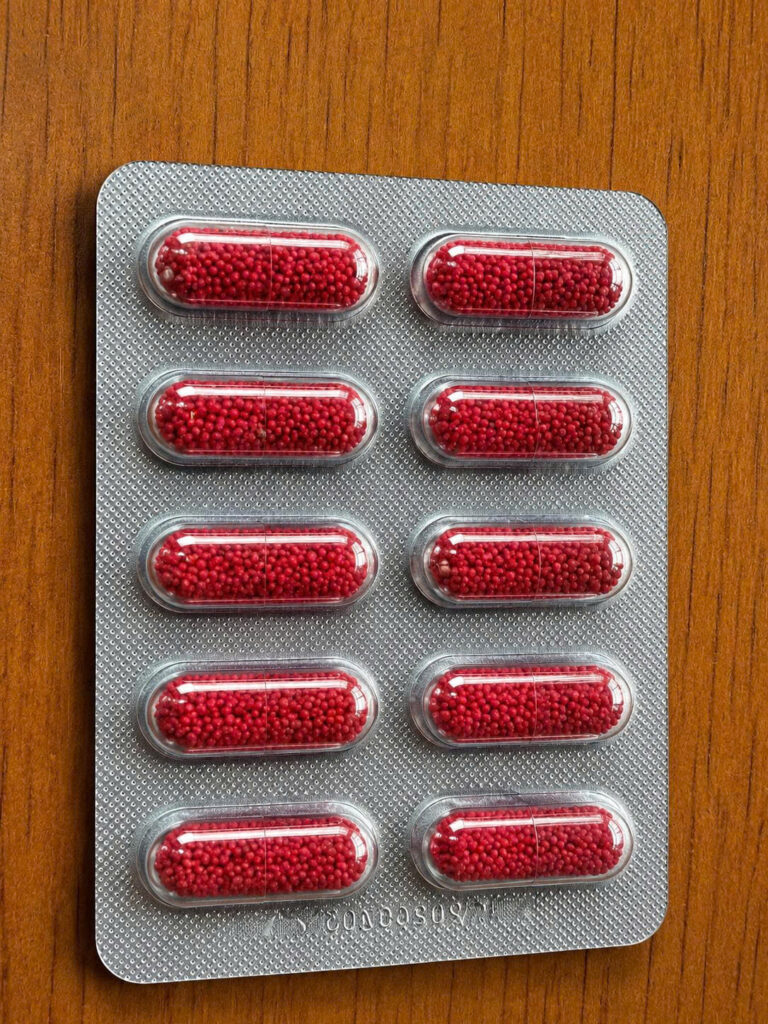
- A single capsule can contain thousands of small pellets.
- After administration, the pellets disperse throughout the stomach and intestines rather than remaining concentrated in one location like tablets or conventional granules.
- This results in more uniform drug distribution and potentially improved therapeutic performance.
Advantages for Sustained-Release Formulations
This is one of the most important benefits of pellet technology.
The spherical shape of pellets provides:
- Uniform surface area
- Consistent coating thickness
- Precise control of drug diffusion rates
- Reduced risk of dose dumping
Reduced Risk of Dose Dumping
If the coating of a few pellets becomes damaged, only a small fraction of the active ingredient is released prematurely.
In contrast, if a sustained-release tablet cracks or breaks, the entire dose may be released at once, potentially leading to dose dumping and safety concerns.
Ability to Combine Multiple Pellet Types in a Single Capsule
Different pellet populations can be incorporated into the same capsule, such as:
- Immediate-release pellets combined with sustained-release pellets
- Pellets designed to dissolve at different pH levels
- Pellets containing different active ingredients
This level of formulation flexibility is difficult to achieve with conventional granules.
Superior Film-Coating Efficiency
Due to their highly spherical shape, smooth surface, and minimal edges or irregularities:
- Coating distribution is more uniform
- Less coating material is required
- Thinner coating layers can achieve the same functional performance
- Manufacturing efficiency is improved while maintaining product quality
These advantages make pellet-based dosage forms a preferred choice for advanced pharmaceutical drug delivery systems requiring controlled release, enteric protection, taste masking, and enhanced therapeutic performance.
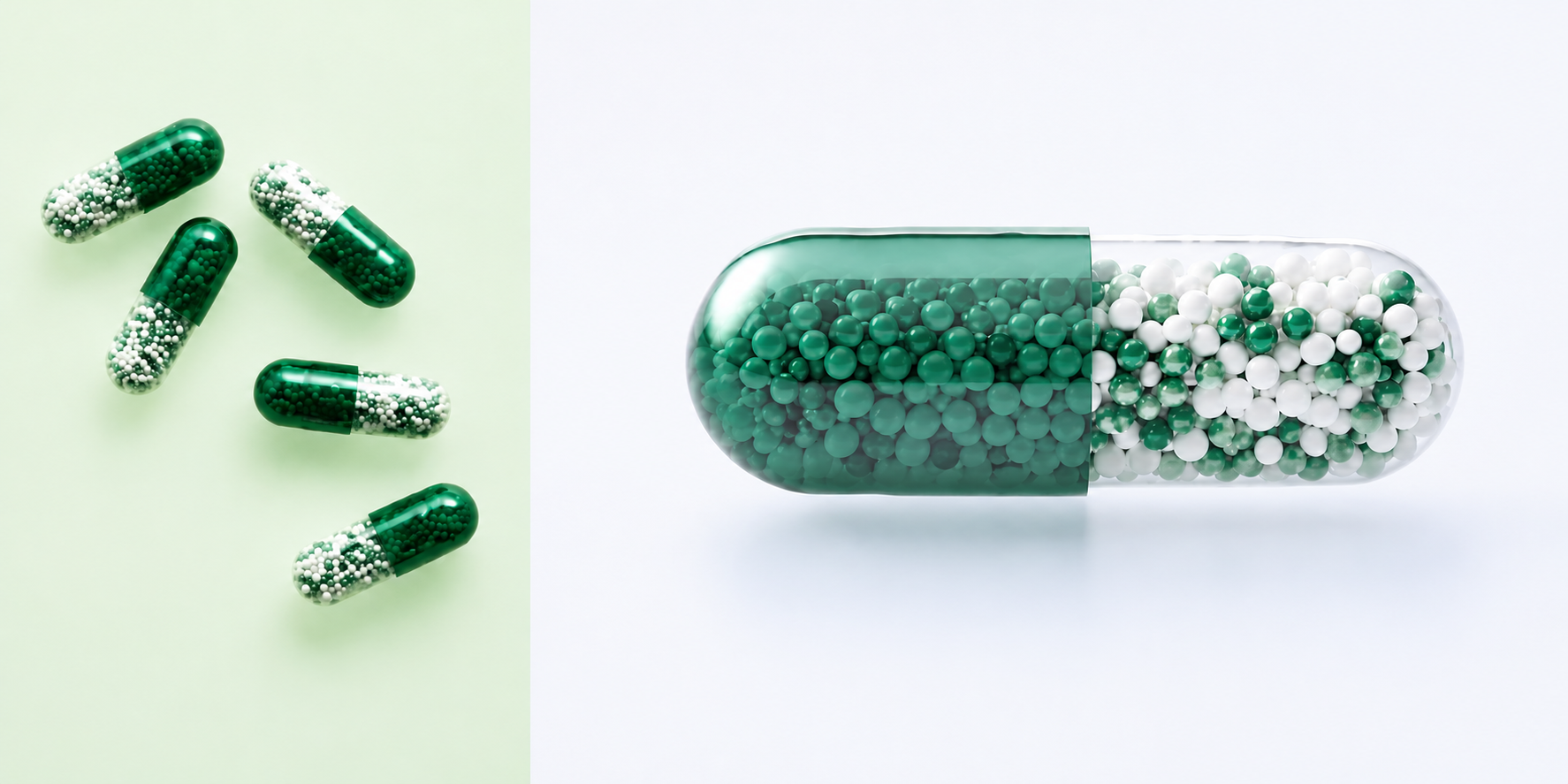 Viên Nang chứa Hạt Vi Cầu
To meet these growing industry demands, Tin Nghi Dac Company proudly introduces its Pellet Production System utilizing Screw Extrusion–Spheronization Technology.
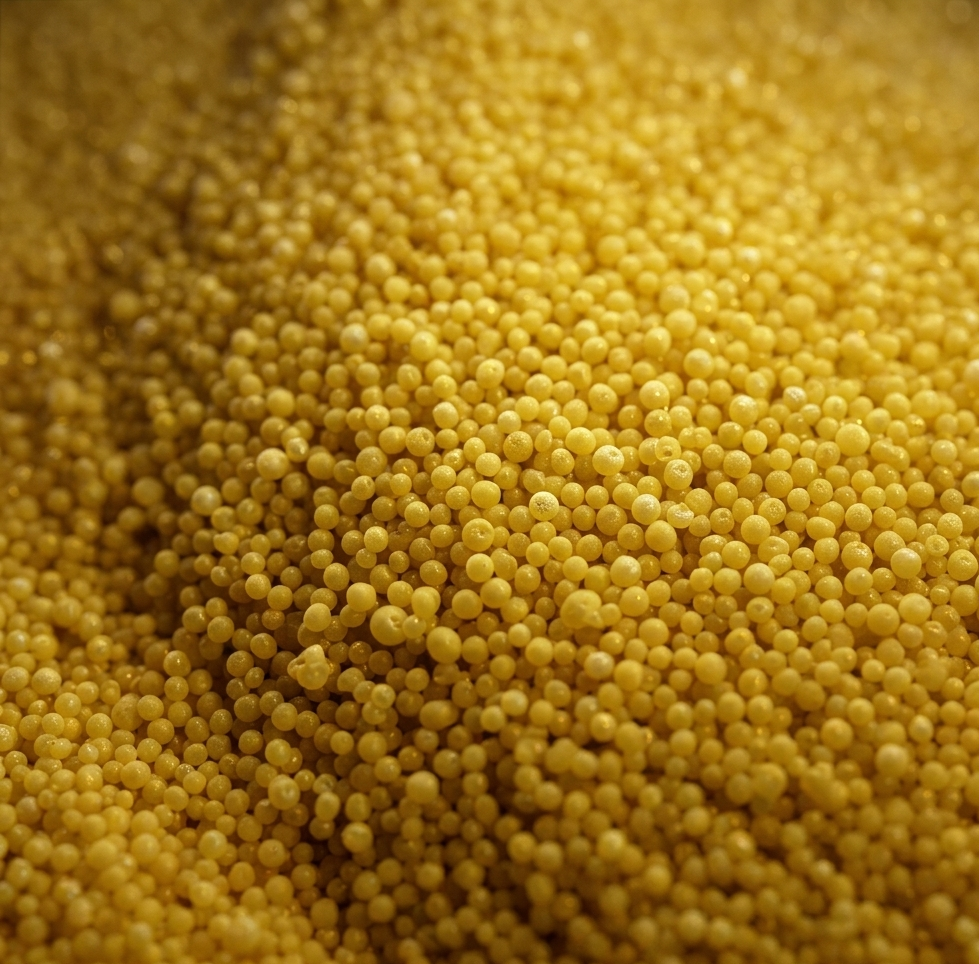
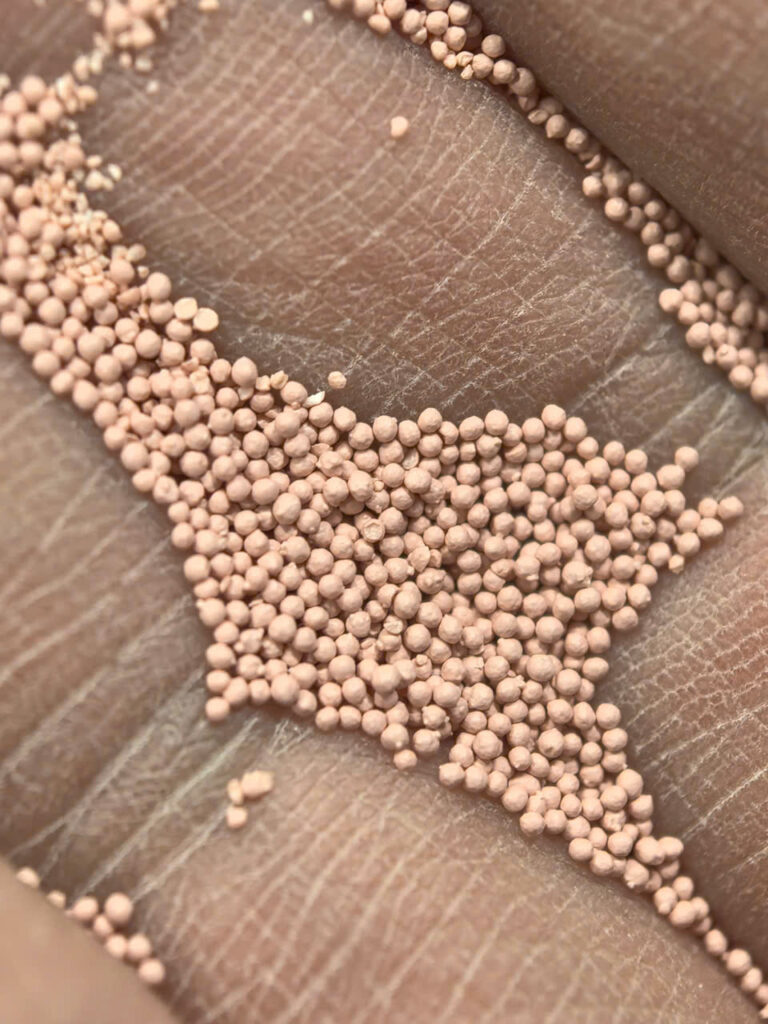
The extrusion–spheronization process enables the production of highly spherical pellets with uniform particle size, meeting the stringent quality requirements of the pharmaceutical industry. This technology is suitable for manufacturing both drug-loaded pellets and excipient pellets, providing a versatile platform for a wide range of pharmaceutical formulation applications.
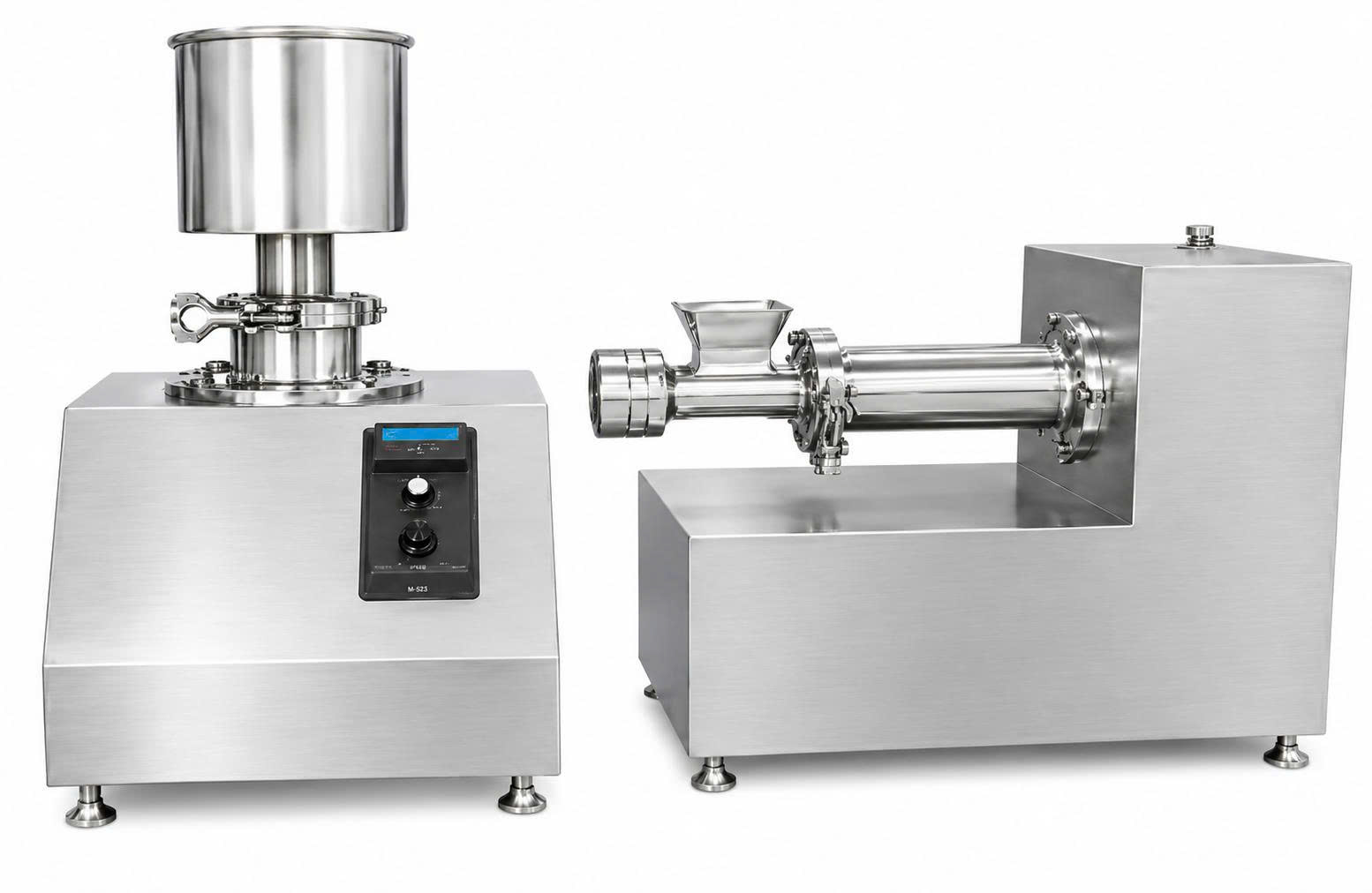
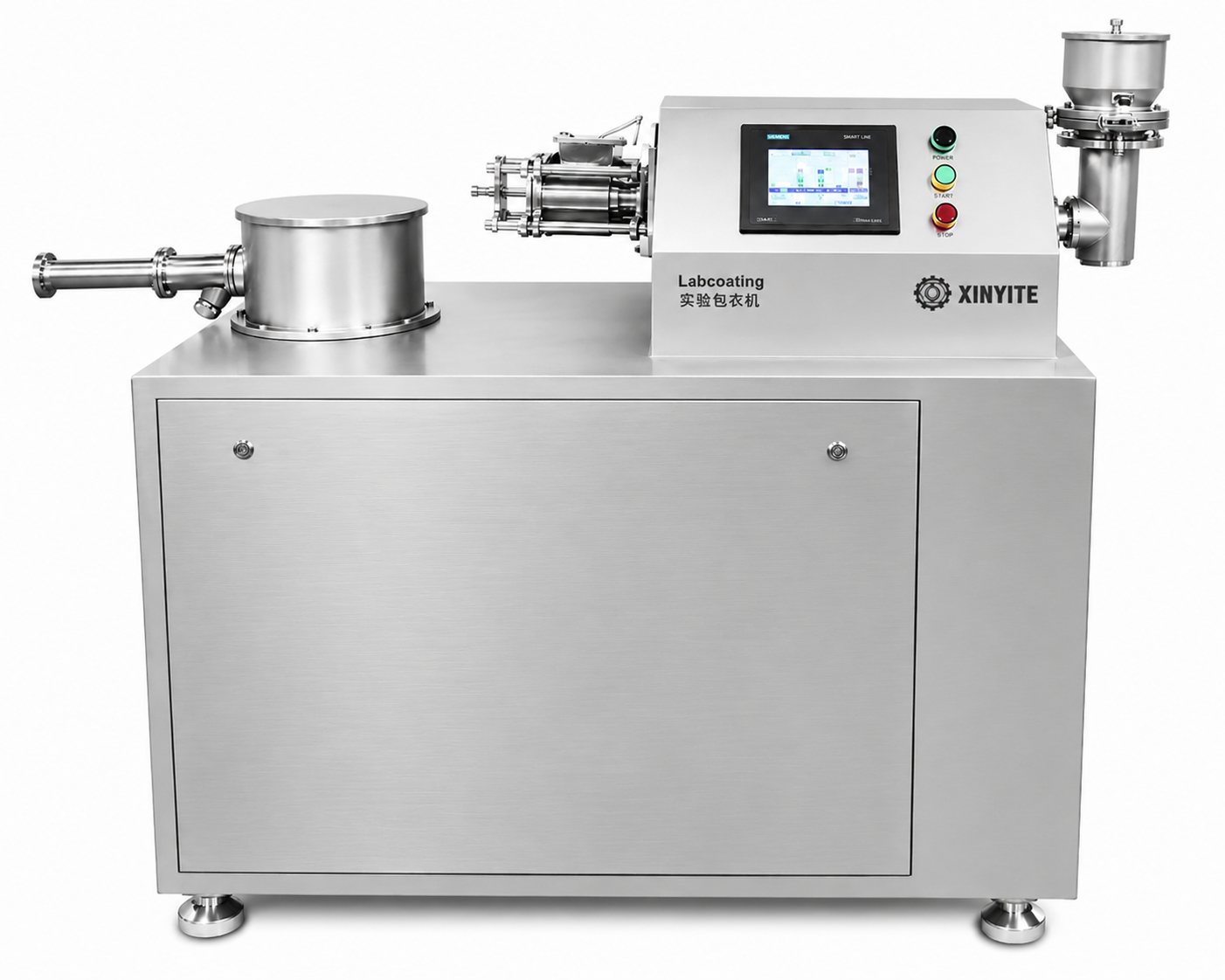
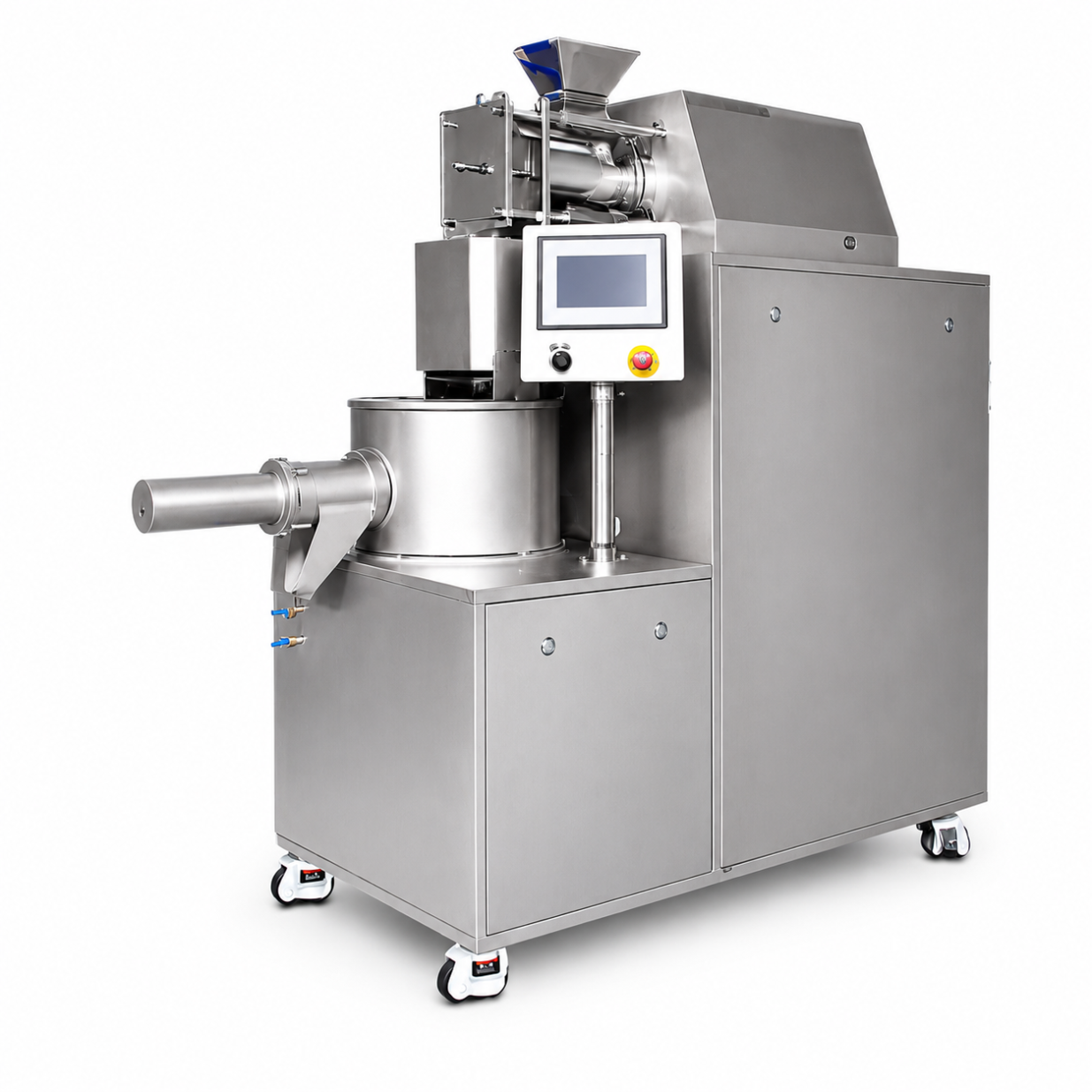
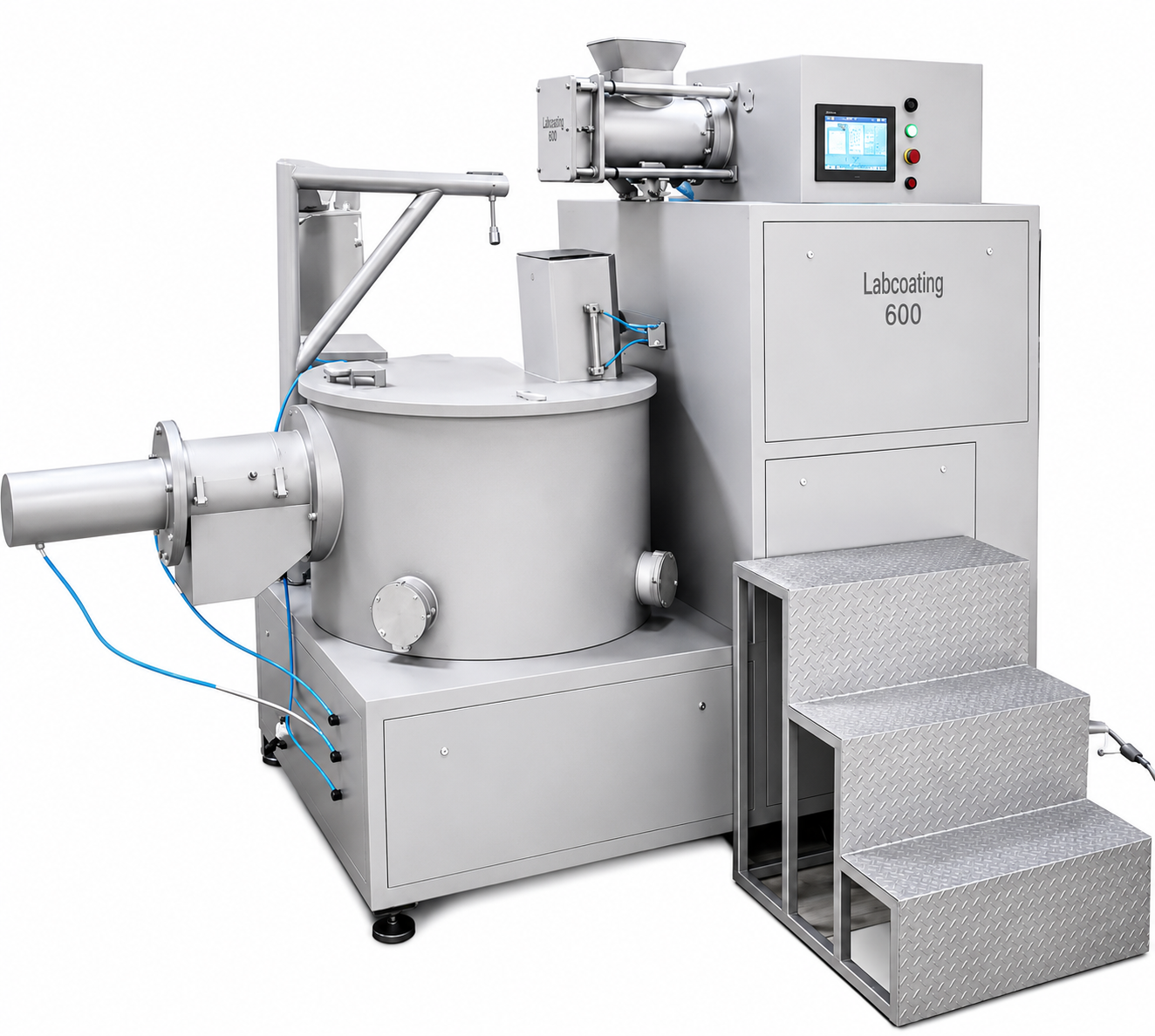
Screw Extrusion and Spheronization Machine for Pellet Production
 |
 |
 |
 |
What Is a Screw Extrusion–Spheronization Pelletizing Machine?
As modern pharmaceutical dosage forms continue to evolve, pellets are becoming increasingly popular due to their ability to provide controlled drug release, reduce gastrointestinal irritation, and improve therapeutic efficacy. To manufacture high-quality pellets, screw extrusion–spheronization technology has emerged as one of the most advanced and widely adopted solutions in the pharmaceutical industry.
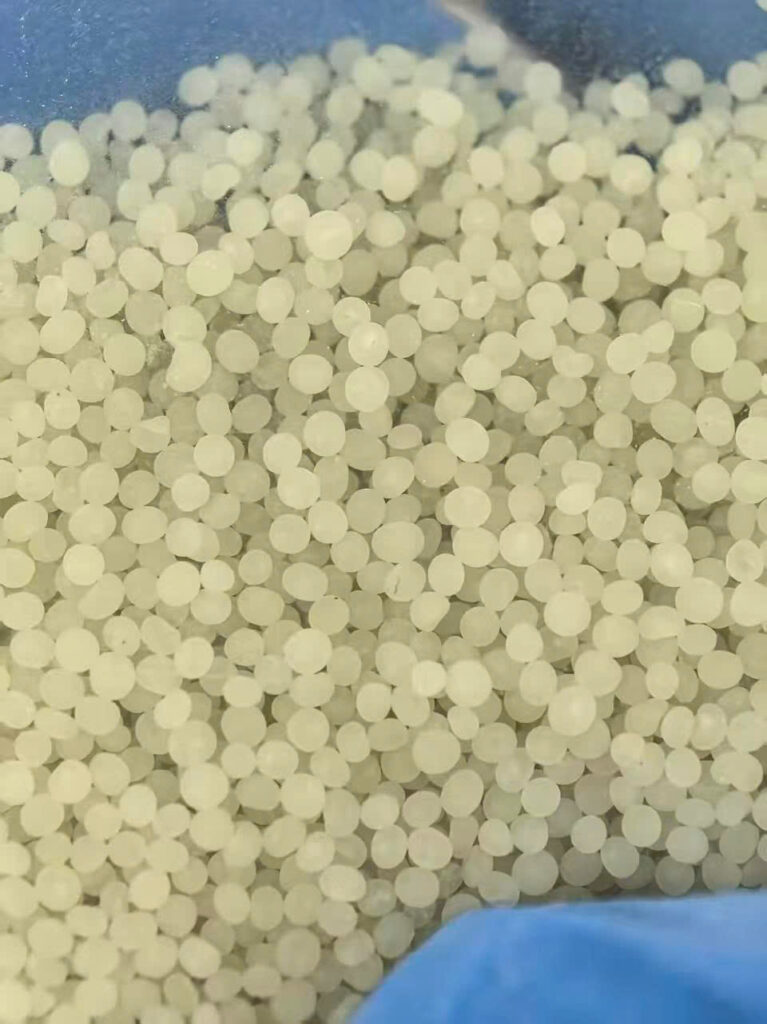
A screw extrusion–spheronization pelletizing machine is designed to produce highly spherical pellets with uniform particle size distribution, excellent mechanical strength, and superior flow properties. These characteristics significantly enhance the efficiency of downstream processes such as drying, film coating, capsule filling, and MUPS (Multiple Unit Pellet System) tablet compression. Compared with conventional granulation methods, extrusion–spheronization technology improves product uniformity, minimizes material loss, and increases overall production efficiency.
Investing in an extrusion–spheronization system enables pharmaceutical manufacturers to expand their product portfolios with advanced dosage forms such as sustained-release products, controlled-release formulations, enteric-coated drugs, and multiple-unit pellet systems (MUPS). In addition, the technology strengthens research and development (R&D) capabilities while improving market competitiveness. It is an ideal solution for pharmaceutical companies seeking to develop high-value-added formulations and meet increasingly stringent quality requirements.
Applications of Pellets
The pellets produced by this technology can be used for:
- Sustained-release pharmaceutical products
- Controlled-release drug formulations
- Pellet-filled capsules
- Drug-loaded pellets containing specialized active ingredients
- Inert starter pellets for film coating applications
- Nutraceutical and dietary supplement products
- Chemical and industrial formulations
Integrated Processing Capabilities
In addition to pellet production, the system can be configured to integrate downstream processes such as drying, drug layering, and film coating within a single production line, helping to streamline manufacturing operations and improve overall process efficiency.
Operating Principle of the Screw Extrusion–Spheronization Pelletizing Machine
The pellet production process consists of the following stages:
Step 1: Preparation of the Wet Mass
Powdered ingredients and excipients are blended with a suitable granulating liquid or binder solution to form a wet mass with the appropriate plasticity and consistency required for extrusion.
Step 2: Extrusion
The prepared wet mass is fed into the extrusion chamber.
Under the action of:
- The feed screw
- Feeding paddles
- Radial compression mechanism
the material is continuously compressed and forced through a cylindrical screen or die, producing uniform extrudates with a predetermined diameter.
Step 3: Spheronization
The extrudates are then transferred to the spheronization chamber.
Under the combined effects of:
- A high-speed rotating friction plate
- Centrifugal force
- Frictional force
- Mechanical shear force
the cylindrical extrudates are gradually rounded into spherical pellets with a uniform particle size distribution and high sphericity.
Integrated Film Coating Function
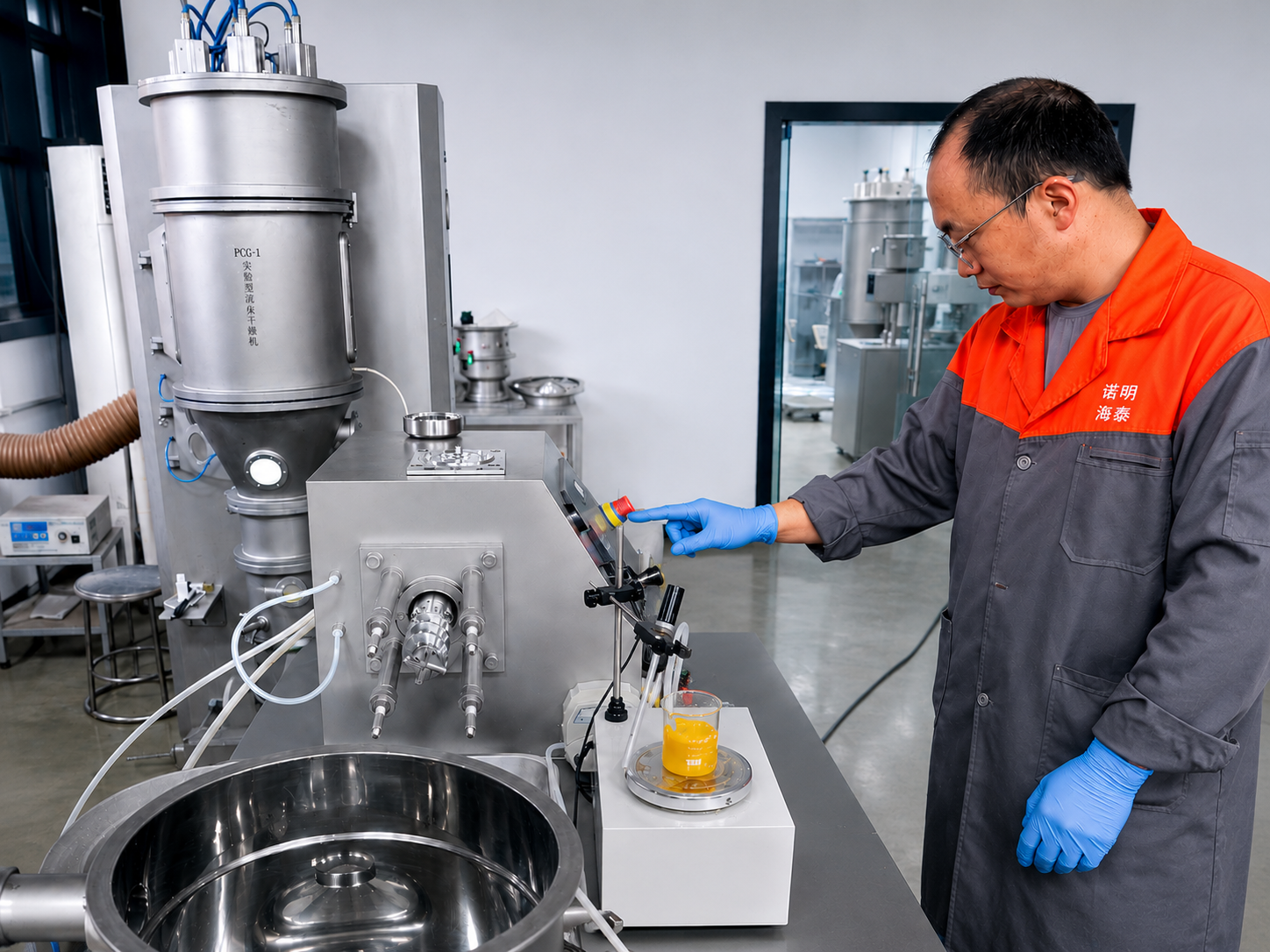
The Mini 250-C model features an integrated film-coating function, enabling both pellet production and film coating to be carried out within a single system. The equipment is equipped with a heating unit, process air supply fan, and exhaust air fan to support coating operations, making it an ideal solution for formulation development, research applications, and small-scale production.
For further information and technical consultation, please contact us. The system can also be integrated with Tin Nghi Dac’s dedicated pharmaceutical coating equipment to meet specific production requirements.
Key Advantages of the Screw Extrusion–Spheronization Pelletizing Machine
Multifunctional Design
For laboratory-scale applications, a single system can perform multiple processes, including:
- Extrusion
- Spheronization
- Granulation
- Drying
- Drug layering or film coating
This integrated design helps reduce equipment footprint and investment costs while improving workflow efficiency.
Efficient Cooling System
The machine is equipped with a water-circulation cooling system for:
- The extrusion screw
- The extrusion barrel
This feature minimizes heat generation during compression and extrusion, protecting heat-sensitive active ingredients and helping maintain product quality.
Wide Range of Pellet Sizes
The extrusion dies and screens are available in various configurations, allowing the production of pellets ranging from:
0.2 mm to 3.0 mm
or larger sizes according to specific process requirements.
Advanced Square-Profile Spheronization Disc Technology
The spheronization disc features a modern square-profile surface design that provides:
- Uniform shear force distribution
- Reduced spheronization time
- Higher product yield
- Improved production efficiency
High-Efficiency Side-Spray Film Coating
Selected models can be quickly converted to operate in Side Spray Coating mode.
Key benefits include:
- Excellent coating uniformity
- Reduced coating material consumption
- Superior coating performance compared with many conventional fluid-bed coating systems
Fully Automated Processing
The system can be integrated with:
- Automatic material feeding
- Extrusion
- Automatic dosing and weighing
- Spheronization
- Film coating
- Product discharge
This level of automation minimizes operator-dependent variability and improves batch-to-batch consistency.
GMP-Compliant Design
The equipment is designed to meet pharmaceutical GMP requirements, featuring:
- PLC-based automatic control system
- Three-level password access management
- Electronic data storage
- USB data export capability
- Production record traceability support
Laboratory and Research Models
Model E-25
Designed for formulation development and early-stage research.
Specifications:
- Capacity: 0.1–0.3 kg/h
- Pellet size: 0.2–3.0 mm
- Extrusion screw diameter: 25 mm
- Machine weight: only 16 kg
Model Mini S
Suitable for laboratory studies and pilot-scale trials.
Specifications:
- Spheronization disc diameter: 60 mm, 80 mm, or 120 mm
- Batch size: 5 g to 100 g
Model Mini 250
Ideal for scale-up studies and process optimization.
Specifications:
- Capacity: 1–3 kg/h
- Spheronization speed: up to 2,000 rpm
Model Mini 250-C
An integrated solution combining extrusion, spheronization, and film coating within a single system.
Specifications:
- Film-coating capacity: 0.3–1.5 kg per batch
- Optional centrifugal granulation upgrade
- Integrated side-spray coating technology
Industrial Production Systems
In addition to laboratory and pilot-scale models, industrial-scale extrusion–spheronization systems are available for commercial pharmaceutical manufacturing, providing higher throughput, advanced automation, and full compliance with GMP production requirements.
| Model Name | E-25 | Mini S | Mini 250 | Mini 250-C |
|---|---|---|---|---|
| Pelletizing Capacity (kg/h) | 0.1-0.3 | 60mm (5-20g/batch)80mm (20-50g/batch)
120mm (50-100g/batch) |
1-3 | 1-3 |
| Coating Capacity (kg/batch) | — | — | — | 0.3-1.5 |
| Available Pellet Diameter (mm) | 0.2-3.0 | 0.2-3.0 | 0.2-3.0 | 0.2-3.0 |
| Extrusion Speed (rpm) | Digital Display – Adj. | — | 3-50 | 3-50 |
| Spheronization Speed (rpm) | — | Digital Display – Adj. | 100-2000 | 100-2000 |
| Extrusion Screw Diameter (mm) | 25 | — | 50 | 50 |
| Turntable Diameter (mm) | — | 60/80/120 | 250 | 250 |
| Coating Temperature (℃) | — | — | — | 15-90 |
| Power Supply | 220V/50Hz 1P 3W | 220V/50Hz 1P 3W | 220V/50Hz 1P 3W | 380V/50Hz 3P 5W |
| Air Source Pressure (Mpa) | — | — | 0.4 | 0.4 |
| Extrusion Motor (kW) | 0.12 (30:1) | — | 0.75 | 0.75 |
| Spheronization Motor (kW) | — | 0.25 | 0.75 | 0.75 |
| Atomization Motor (kW) | — | — | — | 0.37 |
| Exchangeable Head Motor (kW) | — | — | 0/0.75 | 0/0.75 |
| Inlet Fan (kW) | — | — | — | 0.75 |
| Exhaust Fan (kW) | — | — | — | 0.75 |
| Electric Heating Power (kW) | — | — | — | 3 |
| Total Power (kW) | 0.12 | 0.25 | 1.5/2.25 | 6.37/7.12 |
| Overall Dimensions (mm) | 400×180×300 | 260×270×450 | 1550×750×1350 | 1950×850×1750 |
| Machine Weight (kg) | 16 | 15 | 330 | 550 |
Note: Mini 250-C features extrusion, spheronization, and coating functions; centrifugal granulation can be added.
Applications in the Pharmaceutical Industry
The screw extrusion–spheronization pelletizing machine is a key piece of equipment in pharmaceutical pellet manufacturing technology. By combining extrusion and spheronization processes, the system transforms wet masses into highly spherical pellets with uniform particle size, excellent mechanical strength, and superior flow properties. These characteristics make pellets an ideal core material for sustained-release formulations, enteric-coated products, and Multiple Unit Pellet Systems (MUPS).
In addition to pharmaceutical applications, extrusion–spheronization technology is widely used for the production of pellets in nutraceuticals, probiotic formulations, enzyme products, and various granular materials. Compared with conventional granulation methods, this technology offers improved particle size uniformity, enhanced coating performance, and greater consistency in final product quality. With its ability to meet modern manufacturing requirements and stringent quality standards, the screw extrusion–spheronization pelletizing machine has become one of the most widely adopted technologies in the pharmaceutical industry.
Thanks to its ability to produce highly spherical and uniform pellets while maintaining a stable and reproducible manufacturing process, the equipment has become an essential solution for many GMP-compliant pharmaceutical manufacturing facilities.
Tin Nghi Dac – Professional Pharmaceutical Pellet Production Solutions
The Xinyite Screw Extrusion–Spheronization Pelletizing Machine has been specifically developed for pharmaceutical pellet manufacturing applications, meeting the industry’s requirements for precision, process stability, and scalability from research and development (R&D) through to commercial production. Featuring advanced mechanical engineering and intelligent control systems, the equipment produces highly spherical pellets with uniform particle size distribution and excellent mechanical strength, providing an ideal foundation for sustained-release formulations, enteric-coated products, and Multiple Unit Pellet Systems (MUPS).
Xinyite’s extrusion system ensures stable compression and extrusion of wet masses, producing consistent extrudates before they enter the spheronization stage. The optimized spheronization disc incorporates a specialized grooved surface design that enhances spheronization efficiency, reduces processing time, and improves pellet roundness. As a result, the finished pellets exhibit excellent quality and consistency, facilitating downstream operations such as drying, film coating, capsule filling, and other pharmaceutical processing steps.
In addition, the equipment integrates both cooling and film-coating systems, helping to simplify operation, reduce processing time, and improve cleaning and maintenance efficiency.
Beyond its technological advantages, Xinyite equipment is designed in accordance with GMP principles, featuring a hygienic structure that is easy to clean, maintain, and operate. Critical process parameters can be precisely controlled, minimizing material losses, improving production efficiency, and supporting the development of high-value pharmaceutical products.
Combining advanced technology, reliable performance, and compliance with the stringent requirements of pharmaceutical manufacturing, the Xinyite Screw Extrusion–Spheronization Pelletizing Machine is an ideal solution for companies seeking to produce high-quality pellets and develop modern drug delivery systems.
Tin Nghi Dac provides a complete range of screw extrusion–spheronization pelletizing equipment, from laboratory-scale units to fully integrated industrial production lines. Our team offers professional consultation to help customers select the most suitable equipment based on production capacity, product characteristics, and regulatory requirements.
Contact Tin Nghi Dac today for detailed consultation on pharmaceutical pellet production, pellet film-coating solutions, and the design of modern pharmaceutical manufacturing lines that maximize production efficiency and investment value.
